Decision Making
Second-Order Thinking
Consider the consequences of the consequences, not just the immediate result.
Books that use this model

Project Hail Mary
by Andy Weir
Science FictionSpaceAdventureFriendship$23.004.7 / 5A lone astronaut must save humanity from extinction — but he can't remember why he was sent.

Thinking, Fast and Slow
by Daniel Kahneman
Non-FictionPsychologyDecision MakingBehavioral Economics$17.004.2 / 5A tour of the mind explaining the two systems that drive the way we think — one fast and intuitive, the other slow and deliberate.

Dune
by Frank Herbert
Science FictionClassicSpace Opera$14.504.8 / 5The epic story of Paul Atreides on the desert planet Arrakis, where spice, politics, and prophecy collide.

The Dictator's Handbook
by Bruce Bueno de Mesquita & Alastair Smith
Non-FictionPowerPoliticsLeadershipBueno de Mesquita and Smith argue that leaders in every system survive by satisfying the small coalition that keeps them in power, which is why bad behavior is so often good politics.
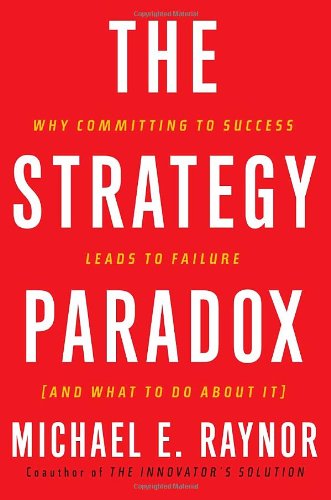
The Strategy Paradox
by Michael E. Raynor
BusinessStrategyRiskUncertaintyRaynor's paradox: the strategies with the greatest chance of success also carry the greatest chance of failure, because both demand total commitment to an uncertain future — and his answer is managing that uncertainty deliberately.

On Obligations
by Cicero
PhilosophyDutyEthicsLeadershipWritten in the last year of his life and addressed to his son, Cicero's De Officiis sets out what a person in public life owes: to justice, to country, and to their own character when duty and advantage collide.
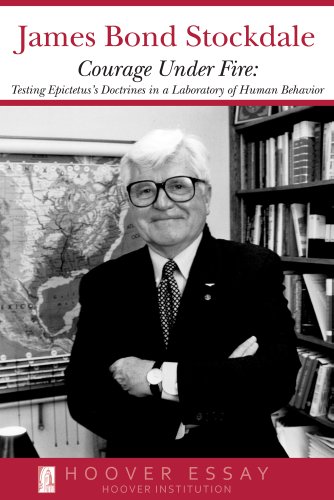
Courage Under Fire
by James B. Stockdale
PhilosophyStoicismEnduranceLeadershipVice Admiral James Stockdale, shot down over North Vietnam in 1965, spent seven and a half years as the senior POW in the Hanoi Hilton. This short book — its full title is Testing Epictetus's Doctrines in a Laboratory of Human Behavior — is his account of how the Enchiridion he had memorized carried him and the men he led through it.

No More Mr. Nice Guy
by Robert A. Glover
Self-HelpMasculinityBoundariesRelationshipsA therapist's recovery plan for Nice Guy Syndrome — men who seek everyone's approval, hide their needs behind covert contracts, and end up frustrated and stuck. Glover's program: stop performing goodness, state your needs directly, set boundaries, and reclaim your masculine edge.

Parable of the Sower
by Octavia E. Butler
Science FictionDystopiaSurvivalChangeIn a 2020s California of walled neighborhoods, drought, and a drug that makes its users worship fire, teenager Lauren Olamina — who feels others' pain and pleasure as her own — founds a new faith for a collapsing world: Earthseed, whose God is Change. The first of Butler's Parable novels, and her most prophetic.

Thinking in Systems
by Donella H. Meadows
Non-FictionSystems ThinkingFeedback LoopsProblem SolvingMeadows' primer on how systems actually behave: stocks, flows, feedback loops, and the traps (policy resistance, shifting burdens) that make well-meant fixes backfire.
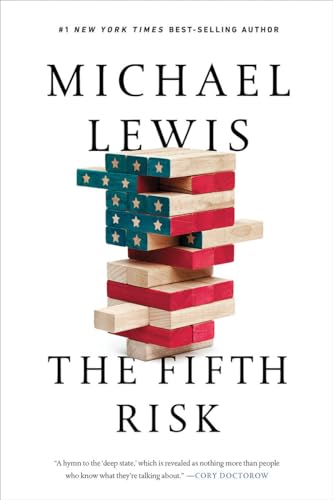
The Fifth Risk
by Michael Lewis
Non-FictionGovernmentRiskPublic ServiceLewis tours the federal departments most Americans never think about, and the slow, invisible risk that accumulates when the people who run them stop being taken seriously.

Powered by Projects
by Antonio Nieto-Rodriguez
BusinessProject ManagementLeadershipOrganizational ChangeNieto-Rodriguez argues the project economy has already arrived: organizations now create value through projects, not operations, and leadership has to be rebuilt around that fact.

Team of Teams
by Stanley McChrystal
BusinessLeadershipOrganizationsAdaptabilityMcChrystal rebuilt a hierarchical task force into a network — shared consciousness, radical transparency, decentralized authority — to fight an enemy that already worked that way.
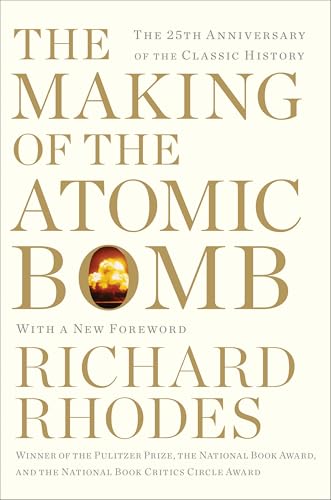
The Making of the Atomic Bomb
by Richard Rhodes
Non-FictionHistoryScienceWarRhodes' Pulitzer-winning history of the bomb: from the first splitting of the atom through Los Alamos to Hiroshima, told through the scientists who saw what was coming and built it anyway.

The Box: How the Shipping Container Made the World Smaller and the World Economy Bigger
by Marc Levinson
Non-FictionTradeGlobalizationInnovationLevinson tells how a plain steel box — the shipping container — cut the cost of moving goods by more than ninety percent and quietly remade ports, cities, and the entire world economy.
Explore other models
- First Principles Thinking
- Compounding
- Inversion
- Occam's Razor
- System 1 / System 2
- Loss Aversion
- Map Is Not the Territory
- Circle of Competence
- Opportunity Cost
- Hanlon's Razor
- Narrative Fallacy
- Incentives
- Feedback Loops
- Emergence
- Social Proof
- Hormesis
- Margin of Safety
- Power Laws
- The Adjacent Possible
- Exaptation
- Consilience
- The Lindy Effect
- Antifragility
- Natural Selection
- Adaptation
- Ecosystems
- The Niche
- Carrying Capacity
- Red Queen Effect
- Diversity as Insurance