The Reading Room
Where to Start with the Stoics
Stoicism has a marketing problem: it is usually sold as endurance — grit your teeth, feel nothing. The books themselves say something better. It is a discipline of attention: know what is yours to govern, spend your time like it matters, and meet events with your judgments examined rather than automatic. This is a reading order for the eleven Stoic books on our shelf — modern doors first, then the ancient sources, then the books that test and deepen them.
- 1
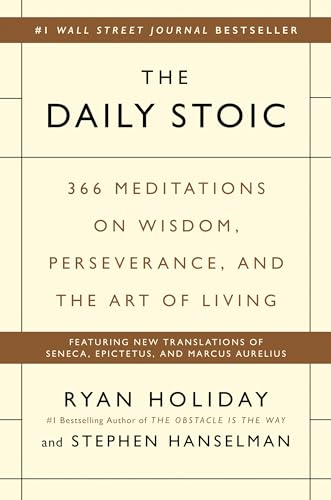
The Daily Stoic
by Ryan Holiday & Stephen Hanselman
Start with a habit, not a tome. One page a day — a passage from Marcus Aurelius, Seneca, or Epictetus with a short modern commentary — organized by the three disciplines of perception, action, and will. By the time a year of pages has compounded, the vocabulary of the philosophy is already yours.
Read this one slowly, in parallel with everything below.
See The Daily Stoic on the site → - 2

A Guide to the Good Life
by William B. Irvine
William Irvine, a philosophy professor, wrote the modern manual: negative visualization, the dichotomy of control, voluntary discomfort — the actual techniques, in plain language, aimed at the philosophy's original goal. Not the suppression of joy, but its security.
The clearest single-volume introduction we carry.
See A Guide to the Good Life on the site → - 3

How to Be a Stoic
by Massimo Pigliucci
Massimo Pigliucci rebuilds the philosophy from its foundations in imagined conversation with Epictetus — what the Stoics actually claimed about desire, action, and assent, tested against modern life. Read it after Irvine and the ancient voices below will sound familiar instead of foreign.
The bridge between the manuals and the sources.
See How to Be a Stoic on the site → - 4

Letters from a Stoic
by Seneca
The first ancient voice, and the warmest. Late in life Seneca wrote to his friend Lucilius about time, death, wealth, and friendship — letters, not lectures, meant to be read one sitting at a time. His recurring subject is the one asset that cannot be recovered.
The Penguin selection of forty letters is the classic entry point.
See Letters from a Stoic on the site → - 5
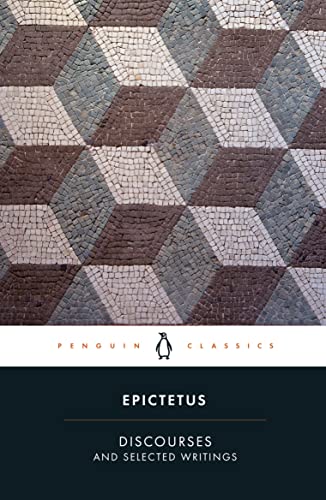
Discourses and Selected Writings
by Epictetus
Epictetus was born enslaved and taught as a freedman that freedom is internal. His student Arrian transcribed the lectures: what is in our power, what is not, and the discipline of working only the first list. This edition adds the Enchiridion, the handbook version.
The teacher behind both Seneca's Rome and Marcus's notebook.
See Discourses and Selected Writings on the site → - 6
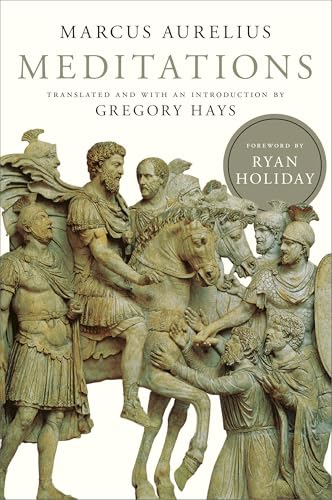
Meditations
by Marcus Aurelius
The cornerstone. Marcus Aurelius wrote these notebooks in Greek, on campaign along the Danube, for no reader but himself — reminders on mortality, duty, and governing his own judgments while governing an empire. Gregory Hays's translation is the modern standard: spare and direct.
Read it after Epictetus and you can hear the lessons being applied.
See Meditations on the site → - 7
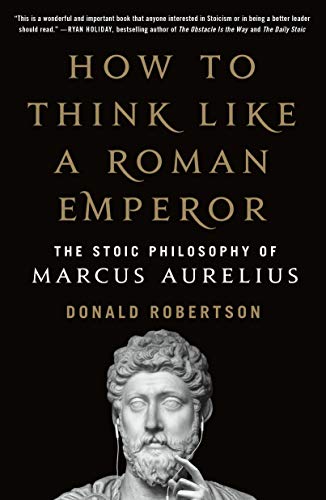
How to Think Like a Roman Emperor
by Donald Robertson
Donald Robertson, a cognitive-behavioral therapist, retells Marcus's life as a worked example — each episode paired with the Stoic practice used to meet it. It deepens the Meditations by showing the man, and shows why therapists trace CBT's roots to this philosophy.
The companion to read alongside or just after the Meditations.
See How to Think Like a Roman Emperor on the site → - 8

The Inner Citadel
by Pierre Hadot
Pierre Hadot's landmark study argues the Meditations were never a diary at all, but spiritual exercises — a discipline for correcting the judgments we lay over events. The deepest book on this list, and the one that changes how you reread everything above it.
For the second pass, when you want the scholarship.
See The Inner Citadel on the site → - 9
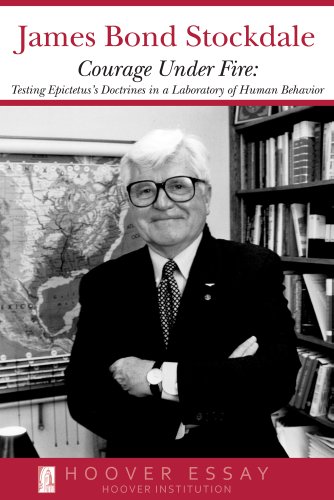
Courage Under Fire
by James B. Stockdale
Vice Admiral James Stockdale spent seven and a half years as the senior POW in the Hanoi Hilton, carrying a memorized Enchiridion. His short book — Testing Epictetus's Doctrines in a Laboratory of Human Behavior — is the philosophy under maximum pressure, reported by the man who ran the experiment on himself.
The proof of concept, written from inside the cell.
See Courage Under Fire on the site → - 10
On Obligations
by Cicero
Cicero wrote De Officiis in the last year of his life, for his son: what a person in public life owes to justice, to country, and to their own character when duty and advantage collide. The statesman's branch of the same tree — Stoic ethics carried into civic life.
The oldest book here, and the one most about leadership.
See On Obligations on the site → - 11

The Obstacle Is the Way
by Ryan Holiday
Close with the modern synthesis. Ryan Holiday takes Marcus's line — the impediment to action advances action — through Rockefeller, Amelia Earhart, Ulysses S. Grant, and Steve Jobs. Read last, with the sources behind you, its stories land as illustrations of a philosophy you now know firsthand.
The popular door — better as an exit than an entrance.
See The Obstacle Is the Way on the site →
All eleven are on the shelf in the book store, each linked to the mental model it teaches — time as opportunity cost in Seneca, the dichotomy of control as a circle of competence in Epictetus, daily practice as compounding in The Daily Stoic. Start with one page a day; the rest of the order will take care of itself.
As an Amazon Associate, Wes Tolbert earns from qualifying purchases.